
Lip flip vs. lip filler: which one do you actually want?
They get talked about interchangeably, but they do completely different things — one relaxes a muscle, the other adds volume. Knowing which is which is what gets you the lips you actually pictured.
 Maria Liuzzi·MSN, APRN, FNP-BC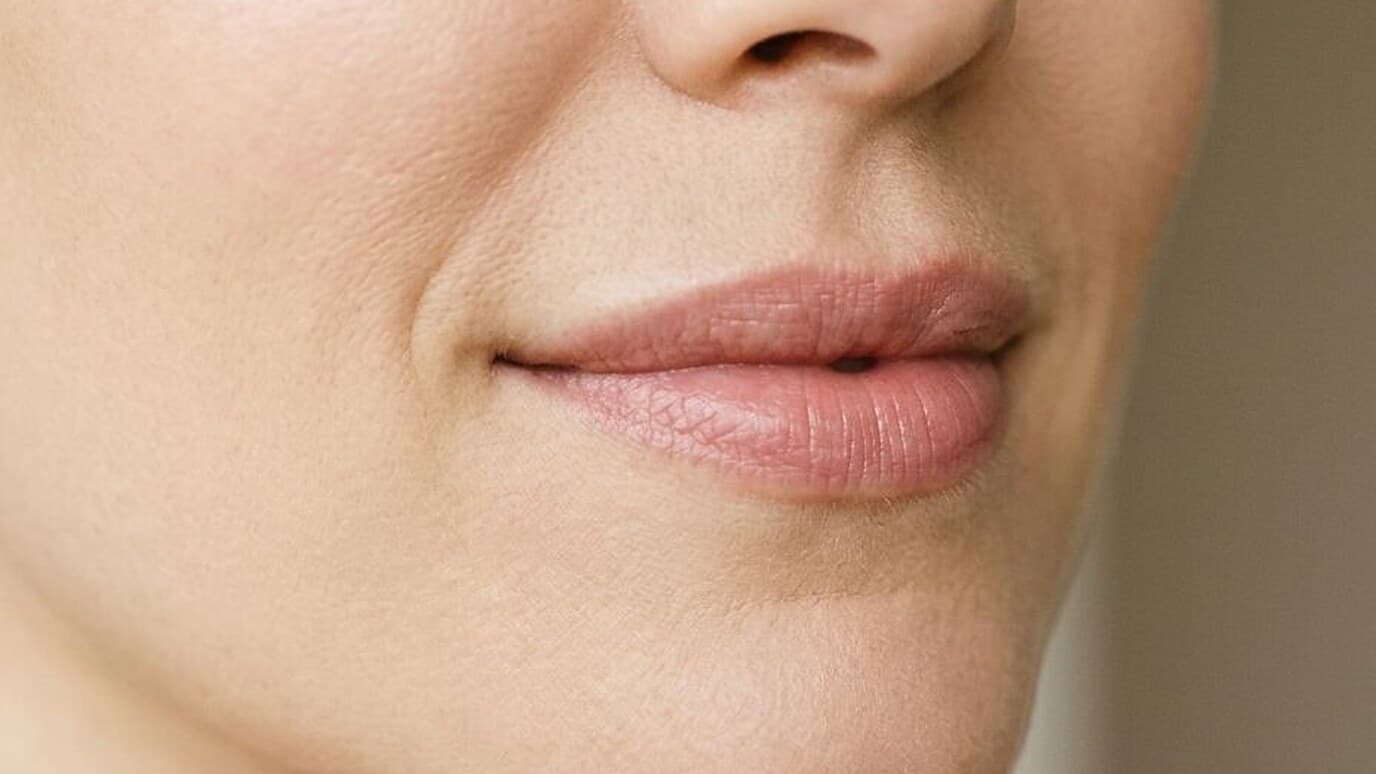
The short answer: a lip flip uses a few micro-units of neurotoxin to relax the muscle around your mouth, so the upper lip rolls slightly outward and shows more of the lip you already have. Lip filler uses hyaluronic acid to add volume that isn't there. A flip reveals; filler adds. That single distinction decides which one is right for you.
Patients ask for these two by name almost every week in our North Haven consult room, and they're often asking for the wrong one — usually because a friend got a great result and they assumed it was the same treatment. Here is how the decision actually works.
What is a lip flip?
The orbicularis oris is the ring of muscle that wraps your mouth. When it contracts, it curls the upper lip inward and downward — which is why some people's upper lip nearly disappears when they smile. A lip flip places two to six micro-units of neurotoxin (Botox, Dysport, or Xeomin) along the very top edge of that muscle. Relaxing just those surface fibers lets the lip unfurl and roll gently outward.
Nothing is added. Your lip doesn't get bigger — it gets more visible. Most patients see the change at rest, and a much more obvious one when they smile.
What is lip filler?
Lip filler is hyaluronic acid — a sugar molecule your body already makes — placed in the lip to add volume, define the border, or correct asymmetry. It works whether or not your muscle is the problem, because it isn't treating muscle at all. It's adding structure where structure is missing.
Because it's hyaluronic acid, it's also reversible. An enzyme called hyaluronidase dissolves it, usually within a day or two. Nothing else we inject can be undone that cleanly, which is exactly why HA is the only category we'll use in lips — an area this mobile and this visible deserves a treatment you can take back.
| Lip flip | Lip filler | |
|---|---|---|
| What it does | Relaxes muscle so more lip shows | Adds volume and defines the border |
| Product | A few units of neurotoxin | Hyaluronic acid, usually under one syringe |
| Visible change | Subtle — most obvious when smiling | Immediate and more noticeable |
| How long it lasts | 8–12 weeks | 6–12 months |
| Time in the chair | 10–15 minutes | 30–45 minutes |
| Swelling | Minimal, hours | Peaks around day two, settles in 3–5 days |
| Reversible? | No — but it wears off in weeks | Yes, dissolvable within a day or two |
| Relative cost | Lower | Higher |
| Best for | A lip that vanishes when you smile; gummy smile | A lip that's genuinely thin at rest |
How do you know which one you need?
There's a test you can run on yourself in a mirror right now. Look at your lips completely at rest, then smile widely and look again.
- Your lip looks fine at rest but vanishes when you smile — that's muscle, not volume. A lip flip is the direct answer.
- Your lip looks thin at rest and stays thin when you smile — that's volume. A flip will barely move the needle; filler is what you're describing.
- Too much gum shows when you smile — that's usually muscle over-lifting the lip, and a flip placed slightly differently is the standard tool.
- Your lips are fine but dry, lined, or dull — neither. That's a hydration and skin-quality question, and a skin booster does it without changing shape at all.
Can you do both at the same time?
Yes, and for a meaningful share of patients the combination is genuinely the right plan — filler for structure and border definition, a flip on top to keep the upper lip from curling under when you smile. We usually stage them rather than doing both on day one, so we can see what each is contributing before layering.
Will my lips look too big at first?
Almost certainly, yes — and that is the normal, expected course rather than a sign something went wrong. Lips swell more than anywhere else on the face, because the tissue is thin, mobile, and unusually well supplied with blood vessels. For the first day or two after filler, most patients look noticeably fuller than the result they're going to keep.
The pattern is predictable: swelling peaks around 24 to 48 hours, most of it resolves over days three to five, and what you see at about two weeks is the actual result. So the fuller version you see on day two isn't the one you're keeping. We walk every filler patient through that timeline before they leave, so you know exactly what to expect on each day.
It's also why we build gradually rather than doing everything in one sitting. Placing a conservative amount, letting it settle, and refining at your two-week check is simply how you land a precise result in an area that swells — and it means you get to see each stage and decide how far you want to take it.
What can go wrong?
With a lip flip, the honest risks are functional rather than aesthetic. Because you're relaxing the muscle you use to purse your lips, some patients notice a difference sipping through a straw, whistling, or pronouncing p and b sounds for the first week or two. It's temporary. If you play a wind instrument or use your voice professionally, tell us before we treat — that changes our timing, and sometimes our recommendation.
With filler, the risks that matter are technique-dependent: lumps, asymmetry, migration above the lip border, and — rarely but seriously — vascular occlusion, which is why anatomy knowledge and injector experience are not optional. This is also why we use dissolvable hyaluronic acid rather than anything permanent in an area this mobile and this visible.
“Lips are millimeter work. A quarter of a syringe placed exactly right looks better than a full syringe placed adequately — and most people are surprised how little it takes to get the result they pictured.”
When the answer is neither
Some lips aren't a filler problem or a muscle problem. A very long distance between the nose and the lip, heavy vertical lines from years of sun exposure, or filler placed elsewhere that has migrated above the border all need a different sequence — sometimes dissolving first, sometimes collagen stimulation around the mouth, and occasionally an honest conversation that a surgical lip lift is the treatment that would actually deliver what you're describing.
Those are good conversations to have early, because knowing the real path to what you want saves you time and money. We'll walk through the options with you at a consult — more on the full picture on our lip shape and hydration page.
How we approach lips in North Haven
Our rule is to under-treat on a first visit and build from there. Lips settle over about two weeks, and what looks balanced on day two is often not what looks balanced on day fourteen. Patients come to us from across Greater New Haven — Hamden, New Haven, Milford, and the shoreline — and a meaningful number arrive wanting work corrected rather than started. Dissolving and rebuilding is a normal part of what we do, and there's no judgment attached to it.
Consults are complimentary. The best lip result starts with knowing which of these two treatments you were actually describing.
Honest answers.

Ready to meet your face?
Every treatment we write about starts with a complimentary consultation. We'll map your face, talk through your goals, and send you home with a real plan — no pressure, no upsell.