
How much does Botox cost in Connecticut? An injector's honest answer
Per unit, per area, first-time pricing, why two friends with the same wrinkles pay different amounts, and what a realistic number looks like in 2026. From the nurse practitioner who does the injecting.
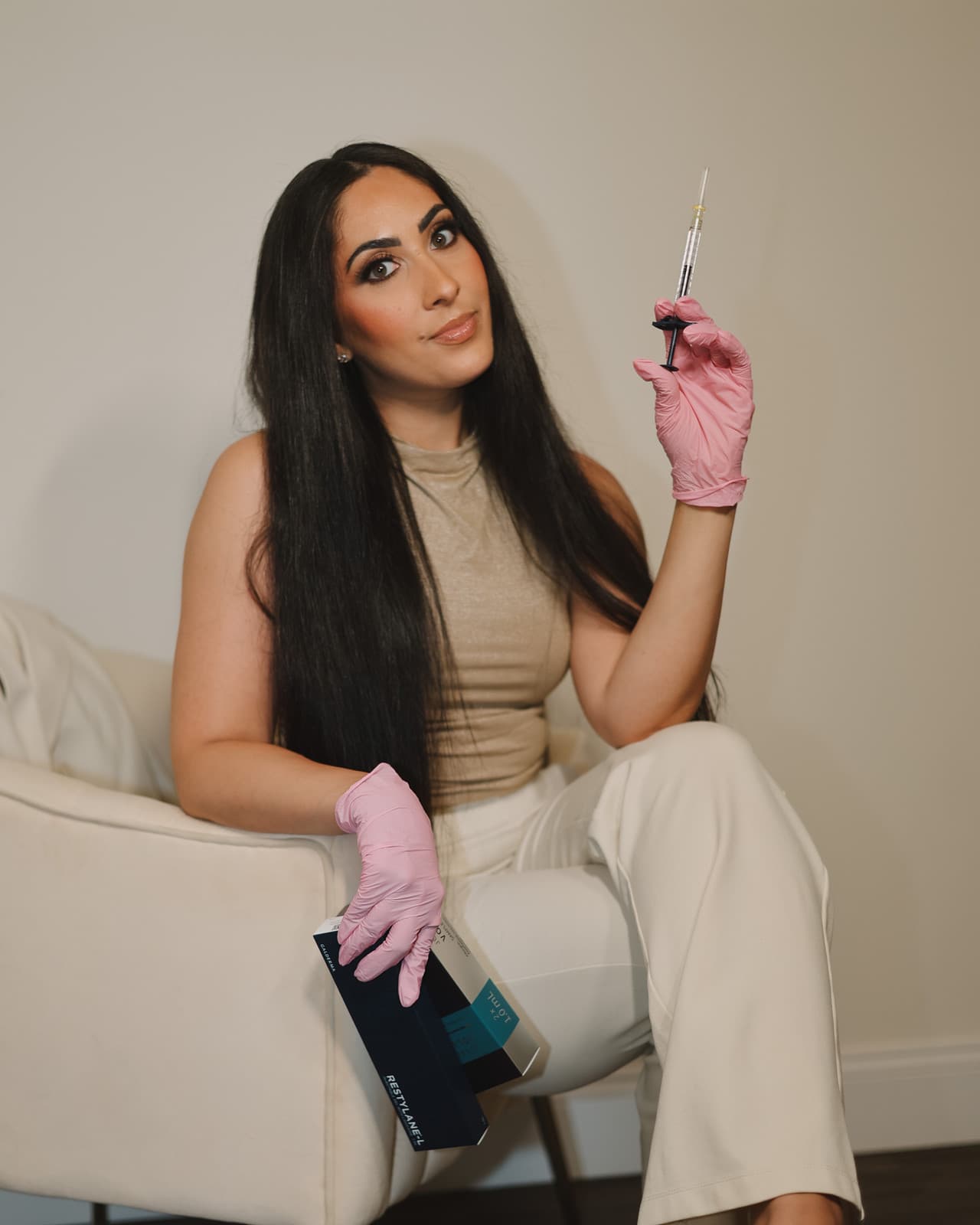 Maria Liuzzi·MSN, APRN, FNP-BC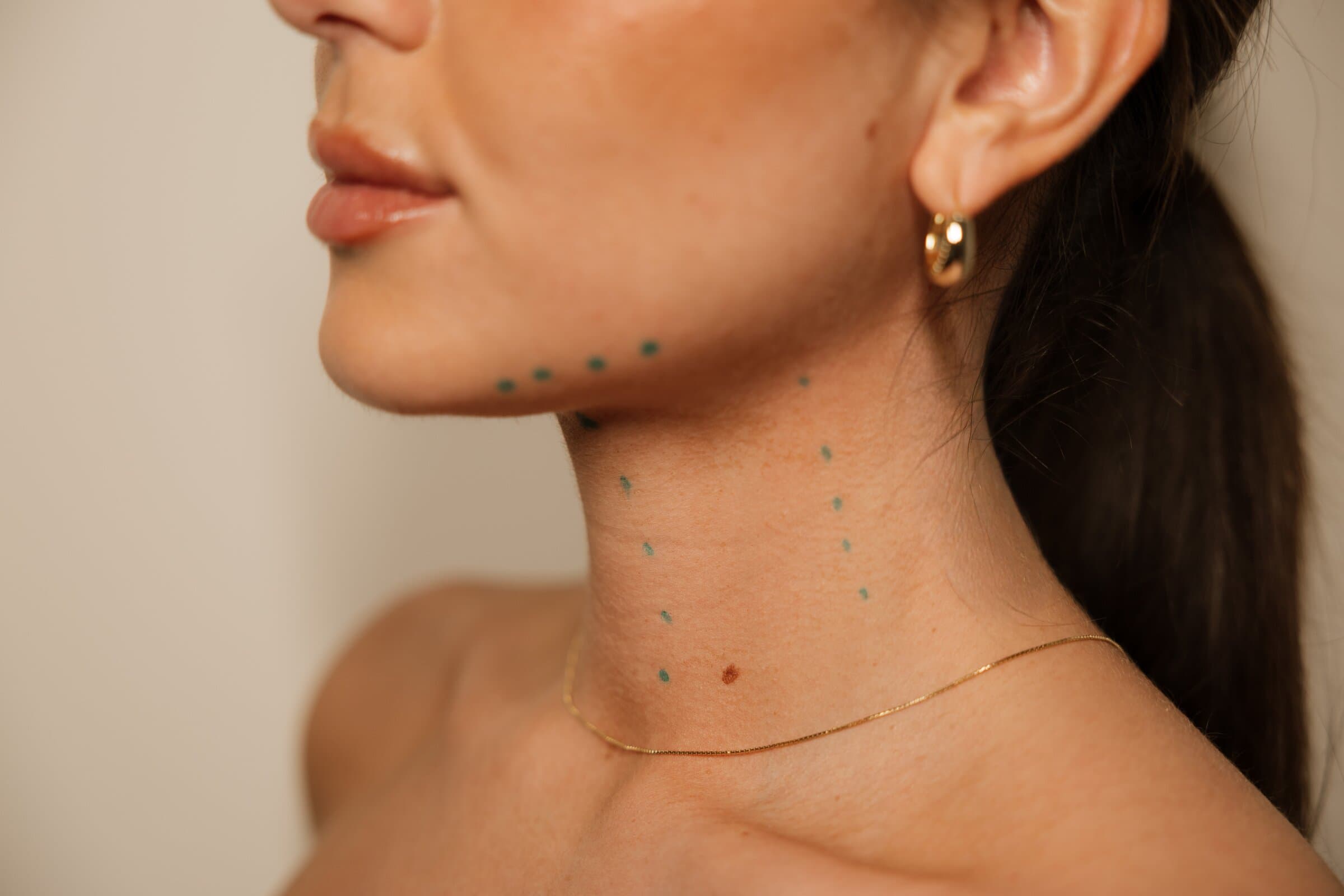
The short answer: in Connecticut in 2026, Botox typically costs $10 to $20 per unit. A standard three-area treatment (the forehead, the frown lines between the brows known as the "11s", and crow's feet) lands most women somewhere between $300 and $700. A single area is less. A large muscle like the masseter is more. That's the honest range. The rest of this post is about why it's that wide, how to tell whether a quote is fair, and how we price at The Beauty Spot: by the unit for most of the face, and by the area only at the extremes, like a tiny lip flip or a very large trapezius, where the dose barely varies from person to person.
I'm writing this because it's the question patients most want answered before they book, and the internet answers it badly. Spa menus hide the number behind "call for pricing." National cost sites average fifty states into a figure that means nothing in North Haven. And the practices that do publish a low per-area price rarely explain what you're getting for it. You deserve a straight explanation from someone who actually holds the syringe.
How Botox pricing actually works
Botox arrives at a practice as a vial of 100 units of dried botulinum toxin, which the injector reconstitutes with saline. A unit is a fixed measure of the active molecule. It's the same unit in every practice in America, which is what makes it a fair yardstick. What differs between practices is how they turn units into a price. There are two models.
Per-unit pricing
You pay a set rate for every unit injected. If your forehead needs 12 units and your 11s need 24, you pay for 36. The number on your receipt is a direct function of how much product went into your face, no more and no less. This is how we price at The Beauty Spot for most areas, meaning everything where the dose genuinely varies from face to face.
Per-area pricing
You pay a flat fee for a "zone": one price for the forehead, whatever dose it takes. It's simpler to advertise, and it looks like a bargain on a menu. The problem is that a flat price has to make the business work on average, which means the patient who needs a light dose subsidizes the patient who needs a heavy one. More often, the heavy-dose patient quietly gets less than she needs so the area still "fits the price."
Both want their forehead and 11s treated. Here is what their anatomy says about the dose.
- Frontalis (the forehead) is thin and moves gently. Her lines show only when she raises her brows and vanish at rest.
- The glabellar complex (corrugators and procerus, the muscles that pull the brows together) is slender. Her 11s are two soft creases.
- Softens fully on a modest dose. More product would not improve the result; it would just flatten her expression.
- Forehead
- 8u
- 11s
- 18u
- Total
- 26u
- Frontalis is broad and active. She raises her brows when she talks, and the horizontal lines are starting to etch in at rest.
- The glabellar complex is bulky and powerful. Her 11s are deep, and you can see the muscle bunch when she frowns.
- Needs meaningfully more product to reach the same softening. Under-dose her and the lines are back in six weeks.
- Forehead
- 14u
- 11s
- 28u
- Total
- 42u
“I don't price per area on most areas. I price per unit, because it allows me to assess the patient based on their anatomy for a more customized treatment, rather than fitting every patient into a per-area box.”
The example above isn't hypothetical. I can have two best friends come in on the same afternoon, same age, same concern, sitting in the same chair an hour apart, and send them out with meaningfully different doses, because one has fine, light brow muscles and the other has a glabella you could crack walnuts with. Per-unit pricing means each of them pays for the treatment her face actually needed. That's the whole argument.
How many units of Botox do you actually need?
This is the number that decides your price, so it's worth understanding. The ranges below are typical Botox doses. Where a muscle is stronger, more expressive, or has been treated less consistently, expect the upper end. Note that these are Botox units. Dysport uses a different unit scale, roughly two and a half to three Dysport units per Botox unit, so a Dysport quote will always show a bigger unit number at a lower per-unit price. Same dose, different arithmetic.
| Area | Typical units | Why the range |
|---|---|---|
| Frown lines (11s) | 16–30 | The strongest muscles on the face; label dose is 20 |
| Forehead lines | 8–20 | Dosed conservatively to keep the brows from dropping |
| Crow's feet | 12–24 | Both sides; 12 per side on label |
| Brow lift | 4–8 | A few units at the tail of the brow |
| Bunny lines | 4–8 | Diagonal lines on the nose |
| Lip flip | 4–8 | Micro-doses along the upper lip border |
| Chin dimpling | 4–10 | Softens an overactive mentalis |
| Masseter (jaw) | 40–60 | Both sides; a large muscle, so the largest dose here |
| Neck bands | 20–40 | The Nefertiti lift; spread along the platysma |
Try it yourself. Pick the areas you're thinking about, then drag the per-unit price across the Connecticut range to see what the math produces. This is market math, not our quote, but it will get you within shouting distance of a fair number before you ever sit in a consult chair.
Choose areas, then set the per-unit rate. Market math, not a quote.
Ranges reflect published Botox dosing norms and 2026 Connecticut market rates. Your actual dose depends on your muscles, which is the whole reason we quote at a consult.
What a realistic Connecticut total looks like
Connecticut sits a little above the national average for Botox, and the state itself has a spread. Fairfield County and shoreline practices close to New York money cluster at the top of the per-unit range, while Greater New Haven and Hartford County run closer to the middle. Published 2026 guides put the statewide average visit around $500, which matches what we see.
In our practice, when a patient is treating the three most common areas (the 11s, the forehead, and crow's feet), most women can expect a total somewhere in the $300 to $700 range. Where you land inside that depends almost entirely on your dose. A first-time patient in her late twenties with light lines might sit near the bottom. A patient with a strong glabella and deep, established 11s will be closer to the top, because she needs the units. One area alone is usually well under $300. Adding a masseter treatment for clenching or jaw slimming adds more than any facial area, because the muscle is simply that much larger.
The five things that move the price
- 1Your dose. Far and away the biggest factor, and the one nobody can tell you until they've watched you frown, raise your brows, and smile. Two patients with "the same" wrinkles routinely need doses 40% apart.
- 2Who is actually injecting. A board-certified nurse practitioner, physician assistant, or physician who does this every day costs more per unit than a technician working from a chart. Dosing judgment is exactly what you're paying for. Ask who will hold the syringe, and what their license is. (Ours are listed here.)
- 3Dilution honesty. A 100-unit vial can be reconstituted with more or less saline. The units are the units either way, but a practice that over-dilutes and then prices "per area" can make a small dose look like a full treatment. Per-unit pricing removes the incentive.
- 4Geography and overhead. Manhattan-adjacent Fairfield County practices carry rent that shows up in the per-unit rate, and it buys you a nicer lobby, not a better dose. In Greater New Haven the rate reflects the injector's time and judgment rather than the landlord's, which is part of why patients from New Haven, Hamden, and the shoreline towns choose to be treated here.
- 5Product authenticity and storage. Real Botox comes from Allergan through licensed distribution and lives in a refrigerator, and that supply chain has a cost. A per-unit price that's dramatically below market is sometimes a sign the product didn't come through it.
Why "cheapest Botox near me" is the wrong search
We get it. It's a recurring expense, and shopping on price is reasonable. But Botox is one of the few purchases where the cheapest option is often the most expensive, because a bad result costs you the money and three months of looking off. A few things that should make you pause:
- A per-area price under about $150. At Connecticut unit costs, that can't cover a real dose of real product plus a licensed injector's time. Something is being shorted, and it's usually the units.
- "Tox" with no brand named. Botox, Dysport, and Xeomin, along with Jeuveau and Daxxify, are all legitimate. "Our house neurotoxin" is not a product.
- No consultation, or a consult that skips watching your face move. Dosing without seeing the muscle contract is guessing.
- Deal-site vouchers. A practice selling Botox at a loss to fill a schedule has to recover it somewhere, and it's usually in dose or follow-up.
- No touch-up policy. A good injector under-doses slightly on purpose at a first visit and sees you at two weeks. Ask what happens if you need a few more units. The answer tells you how the practice thinks.
How our pricing is structured
Two things about how we charge deserve a plain explanation, because they're both deliberate.
We price per unit for most areas, with a couple of sensible exceptions. You've read the reasoning above: wherever the dose genuinely varies from face to face, the unit is the fair yardstick, and your receipt is an itemized count of units by area. The exceptions are at the extremes. A very small area like a lip flip, where the dose is a few units for almost everyone, gets a simple flat price. A very large area like the trapezius ("trap tox" for neck and shoulder tension), where the dose is big and predictable, is also flat, because a per-unit number there just makes a straightforward treatment look complicated. Everything in between, which is most of what people come in for, is per unit.
We have three price points for the same unit. A first-time booking price for patients dipping a toe in, whether they're new to Botox or new to me, because a first visit is a deliberately conservative one and I'd rather you try it than agonize over it. A rebooking rebate for patients who come back on schedule, which rewards consistency. And regular pricing for everyone in between.
“I try to have consistent treatments because it helps me learn how someone's muscles respond and fine-tune dosing to get us closer to our individual goals. All faces are different.”
The rebooking rebate isn't a loyalty gimmick. Every visit teaches me something about your face: which muscles came back first, whether your left brow needs two units more than your right, whether we can drop the forehead dose because the 11s are doing the work. A patient I've treated four times on schedule gets a more precise, often smaller, dose than a patient I see once a year. Consistency is clinically better, so I price it that way.
How to genuinely pay less without cutting corners
- Enroll in Allē before your first visit. It's Allergan's free rewards program. Botox earns points on every treatment, and they convert to real dollars off. Most patients who skip it leave money on the table for years.
- Rebook on schedule. Our rebooking pricing is the most reliable discount we offer, and it produces better results. See above.
- Treat what matters, well. Three areas done properly beats five areas done thin. If your 11s are the thing you see in the mirror, start there.
- Ask about the plan, not the deal. A written plan with unit counts by area is the only quote you can actually compare between practices. A "$X per area" flyer isn't.
- Use financing for a bigger plan, not for Botox alone. Care Credit, Affirm, Zip, and Klarna are all available, but a single Botox visit rarely needs them. Save the financing for a fuller plan that includes filler or a skin series.
Does the brand change the price?
A little, and less than the menus suggest. Botox, Dysport, and Xeomin are all botulinum toxin type A. Dysport is usually cheaper per unit but needs more units, and the visit totals land within a few dollars of each other when dosed equivalently. We covered the real differences (onset, spread, longevity, who each suits) in Botox vs. Dysport vs. Xeomin. Choose the brand for your physiology and your injector's experience, not for the per-unit sticker.
What happens at a consult
You'll frown, raise your brows, squint, and smile while I watch. I'll tell you which areas are worth treating, which aren't yet, and (this happens weekly) when a line you came in about would be better served by something other than Botox. Then you get a written plan: areas, units, and the number. There's no obligation, no deposit, and no one calling to follow up. The consult is free because the plan is the product. You can take it home and think.
If you're in New Haven, Hamden, Wallingford, or anywhere in the Greater New Haven area, we're at 528 Washington Avenue in North Haven with free parking at the door. Book a complimentary consult, and you'll leave with a real number for your face, not a range from the internet.
Honest answers.

Ready to meet your face?
Every treatment we write about starts with a complimentary consultation. We'll map your face, talk through your goals, and send you home with a real plan — no pressure, no upsell.